
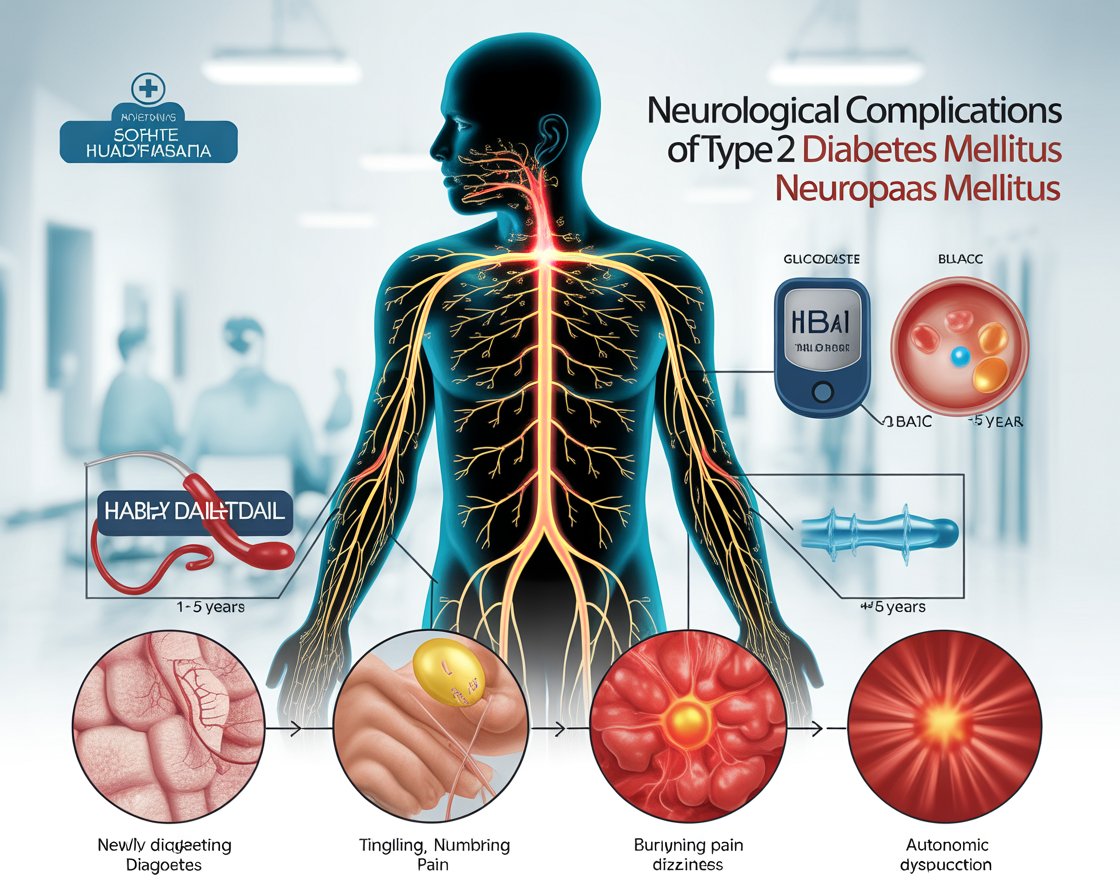
Neurological Complications of Type 2 Diabetes Mellitus: A Duration-Based Comparative Study at a Secondary Care Hospital in Karachi, Pakistan

Authors: Muhammad Adil Ramzan • Hamda Rehman • Bhavesh Kumar • Abdul Ghafoor • Neeta Maheshwary • Waseem Asif • Adnan Anwar • Atif A. Hashmi

Journal: Cureus

DOI: https://doi.org/10.7759/cureus.88562

Abstract

Objective

Type 2 diabetes mellitus (T2DM) often leads to neurological complications that tend to increase in severity with disease duration. This study compared the prevalence of neurological symptoms in individuals with T2DM with respect to the duration of disease.

Methodology

This cross-sectional study was carried out over a six-month period at secondary care hospitals. A total of 420 patients with T2DM, aged between 40 and 65 years, were categorized into three equal groups of 140 based on duration of diabetes. Group A included newly diagnosed patients (less than or equal to one year), Group B comprised individuals with one to five years of diabetes, and Group C consisted of those with a duration exceeding five years. Clinical evaluations focused on glycemic control (glycated hemoglobin (HbA1c) and postprandial glucose) and neurological complications involving peripheral, autonomic, and central nervous systems. Data were analyzed using IBM SPSS Statistics for Windows, Version 20 (Released 2012; IBM Corp., Armonk, New York, United States), with chi-square and Mann-Whitney tests applied, with p-values <0.05 taken as statistically significant.

Results

This study’s findings showed that Group A (less than or equal to one year) had significantly higher mean age, weight, BMI, respiratory rate, heart rate, and random blood sugar levels compared to Groups B and C. Gender distribution varied significantly, with all males in Group A and more females in Group B. Dyslipidemia and smoking history were significantly associated with diabetes duration (p < 0.001), while hypertension was not. Neuropathy symptoms, especially tingling and numbness, were more common in Group C, while autonomic symptoms like fatigue and irritability were highest in Group B. Socioeconomic status and type of therapy also showed significant differences across groups (p < 0.05).

Conclusion

This study concluded that peripheral neuropathy symptoms were more common in patients with longer diabetes duration, indicating progressive nerve damage over time. Some symptoms, such as burning pain and fatigue, appeared earlier, suggesting early metabolic changes. Autonomic symptoms also varied significantly, highlighting the complex progression of neurological involvement in T2DM.

Household Food Insecurity among Families with Children Aged 2–5 Years in District Naushahro Feroze, Pakistan

Authors: Muhammad Parial Jokhio, Rukhsana Khan, Iqra, Tahir Hussain, Zohaib Ali, Neeta Maheshwary & Waseem Asif

Journal: International Journal of Endorsing Health Science Research

DOI: https://doi.org/10.29052/IJEHSR.v13.i2.2025.73-80

Abstract

Background: Early childhood represents a critical window for physical and cognitive development, heavily influenced by nutritional status and household conditions. Household Food Insecurity (HFI) defined as limited or uncertain access to sufficient, safe, and nutritious food remains a key determinant of childhood undernutrition. In Pakistan, particularly in rural areas, HFI continues to pose a widespread challenge. This study aimed to assess the level and patterns of HFI among families with children aged 2 to 5 years in Union Council Dabhro (Darbelo), Taluka Kandiaro, District Naushahro Feroze, Sindh, Pakistan.

Methodology: A community-based cross-sectional survey was conducted among 106 households with children aged 2 to 5 years. A purposive sampling approach targeted households registered with Lady Health Workers (LHWs). Data were collected using a structured, pretested questionnaire incorporating the Household Food Insecurity Access Scale (HFIAS). Descriptive statistics were analyzed using SPSS version 20.0.

Results: The prevalence of HFI was alarmingly high. A total of 82.1% of households reported being unable to eat preferred foods, 81.1% reduced meal sizes, and 77.4% had fewer meals per day. Furthermore, 70.8% experienced entire days without food, and 51.9% went a full day and night without eating. The mean household size was 9.6 members. Based on HFIAS classification, 42.5% of households were severely food insecure and 57.5% were mildly food insecure. None of the households were classified as food secure or moderately food insecure.

Conclusion: This study underscores a substantial burden of food insecurity among rural families with young children in District Naushahro Feroze. These findings highlight the need for locally tailored, community-based interventions such as nutrition-sensitive social protection programs and targeted education to address food insecurity and improve child well-being in similar rural contexts.

Effectiveness of Adjunct Physiotherapy in Enhancing Recovery from Bell’s Palsy: A Quasi-Experimental Study

Authors: Abdul Hafeez Bughio1, Muslim Ali Lakhair1, Hasnain Ali Moryani1, Waseem Asif 1, Neeta Maheshwary

Journal: Proceedings

DOI: https://doi.org/10.47489/szmc.v39i3.777

Abstract

Background: Bell’s palsy (idiopathic facial nerve paralysis) can lead to incomplete recovery and sequelae in a significant minority of patients. While corticosteroids are the mainstay early treatment, the role of adjunct physiotherapy (facial exercises and related rehabilitation) in improving outcomes remains under-investigated, especially in resource settings like Pakistan.

Objective: To compare the degree of recovery in Bell’s palsy patients managed with standard medical therapy alone versus

those receiving additional physiotherapy, in a quasi-experimental hospital-based study.

Methods: A quasi-experimental study was conducted at a tertiary care hospital after approval from the Institutional Review Board. A total of 126 patients with acute unilateral Bell’s palsy were allocated to two groups (63 each). Group A received conventional medical therapy (corticosteroids ± antivirals), while Group B received the same plus structured physiotherapy. Outcomes were the House–Brackmann (H-B) grading and the Facial Disability Index (FDI), assessed at baseline and 3 months. Data were analyzed in SPSS v25 using t-tests, Mann–Whitney U, and chi-square tests; effect sizes and 95% confidence intervals were reported, with p<0.05 considered significant.

Results: Of 126 enrolled patients (mean age 40.3±12.5 years; 54% male), 120 completed the 3-month follow-up (6 lost to follow-up, evenly from both groups). Baseline characteristics (age, sex distribution, side of palsy, and initial H-B severity) were comparable between groups (p>0.2 for all). At 3 months, complete or near-complete recovery (H-B grade I or II) was achieved in 53 patients (84.1%) in Group B, versus 42 patients (66.7%) in Group A (p=0.014). No serious adverse events were noted; all patients tolerated the interventions well.

Conclusion: Adjunct physiotherapy significantly enhanced facial nerve recovery and functional outcomes in Bell’s palsy compared to medical therapy alone, supporting its integration into standard care. Further randomized studies are recommended to confirm these benefits and to optimize physiotherapy protocols for Bell’s palsy.

Clinical and Immunological Manifestations of Patients Presenting With Systemic Lupus Erythematosus At Tertiary Care Hospital, Karachi

Authors: Asfa Ahmed, MuhammadOmer Sultan, Muhammad Inam Khan, Alisha Ahmed

Journal: Biological and Clinical Sciences Research Journal

DOI: https://doi.org/10.54112/bcsrj.v6i1.1545

Abstract:

Systemic Lupus Erythematosus (SLE) is a chronic autoimmune disease that affects multiple organ systems, with a high prevalence among young women. It presents variousclinical and immunological manifestations, including arthritis, skin rashes, oral ulcers, hematological abnormalities, and  neurological  involvement.  Early  diagnosis  and  management  depend  on recognisingkey  clinical  symptoms  and  autoantibody  profiles. Understanding  SLE  patterns  in  different  populations  is  essential  for  improving  diagnostic  accuracy,  treatment  strategies,  and  patient  outcomes.

Objective:This study aims to assess the clinical and immunological characteristics of SLE patients in a tertiary care hospital, identifying common symptoms,  disease  manifestations,  and associated  autoantibodies.

Methodology:  A  cross-sectional  study  was conducted on  131 patients diagnosed with  SLE  at a  tertiary  care  hospital.  Data  were  collected  on  demographics,  clinical symptoms,  and  immunological  markers,  including antinuclear antibodies (ANA), anti-dsDNA, anti-Sm, anti-Ro, anti-La, and antiphospholipid antibodies. Statistical analysis was performed using SPSS version 23 to determine the prevalence and associations of disease manifestations.

Results:The study population had a strong female predominance (77.9%), with most patients aged 20–40 (77.9%). Arthritis (67.2%), skin rash (67.2%), oral ulcers (77.1%), and photosensitivity (67.2%) were the most frequent symptoms.  Neurological  involvement  was  noted  in  36%  of  patients,  while  hematological  abnormalities  included  hemolytic  anemia  (31.3%), thrombocytopenia (29.8%), and leukopenia (13%). Immunological analysis showed ANA positivity in 78.6% of patients, with anti-dsDNA (61.1%) as the  most  common  specific  autoantibody.  Other  antibodies  included  anti-Sm  (20.6%),anti-Ro  (15.3%),  anti-La  (14.5%),  and  anti-RNP  (10.7%). Antiphospholipid antibodies were present in 15.3%–13.7% of patients, indicating a risk of thrombotic complications. Comorbid conditions, such as hypertension (32.8%), diabetes (21.4%), dyslipidemia (16.8%), smoking (25.2%), and obesity (23.7%), were also prevalent, highlighting increased cardiovascular risk.

Conclusion:The findings emphasisearthritis, skin rash, oral ulcers, and anti-dsDNA positivity as key features of SLE diagnosis. The  high  prevalence  of  autoantibodies  and  cardiovascular  risk  factors  calls  for  regular  monitoring,  multidisciplinary  management,  and  early intervention  to  improve  patient  outcomes.  Future  research  should  focus  on  long-term  disease  progression  and  genetic  predisposition,with more extensivemulticenter studies to refine diagnostic and treatment strategies.

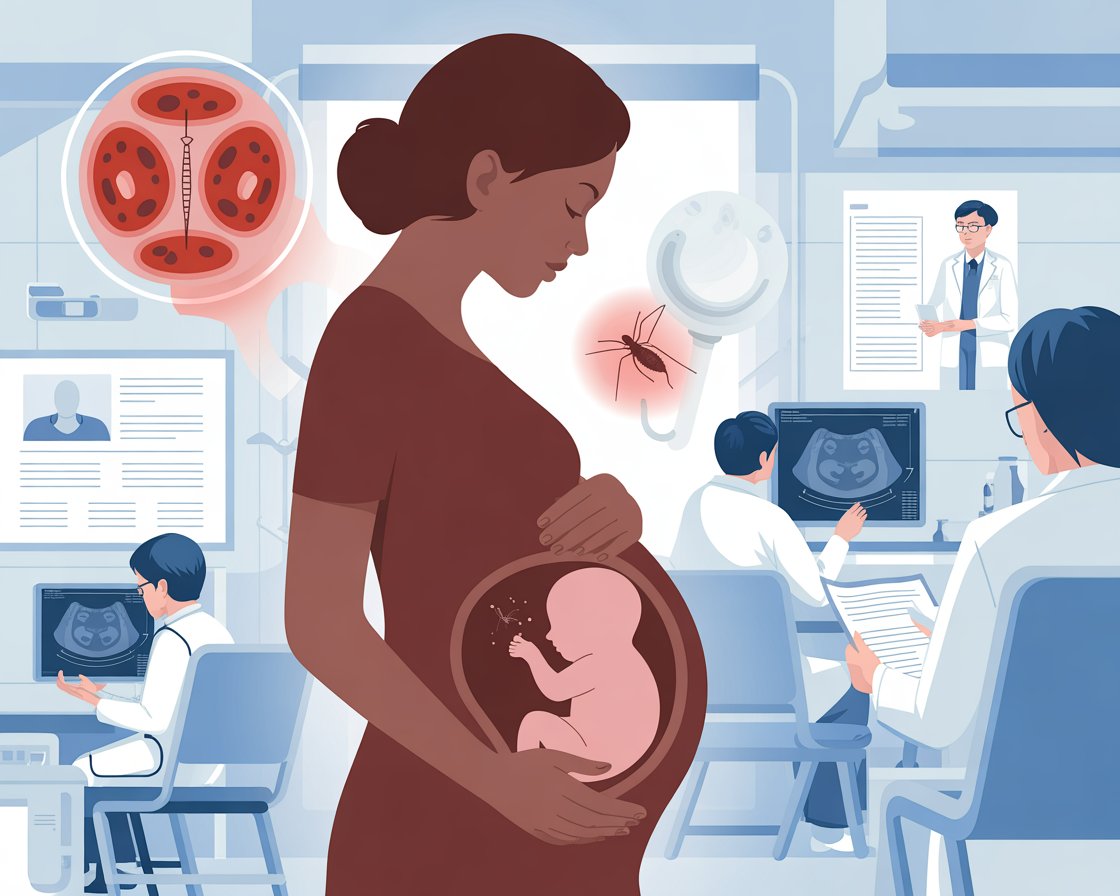
Fetomaternal Outcome of Pregnant Women with Malaria

Authors: Mehwish; Mehreen Memon; Bakhtawar Solangi; Erum; Raishem; Farzana; Tosheeba; Neeta Maheshwary

Journal: Pakistan Journal of Health Sciences

DOI: https://doi.org/10.54393/pjhs.v6i7.3124

Abstract:

Malaria during pregnancy is a major public health concern, with devastating implications for both the mother and the unborn child.

Objectives: To evaluate the maternal and fetal outcomes in pregnant women infected with Plasmodium falciparum and Plasmodium ovale/vivax.

 Methods: This descriptive cross-sectional study was carried out in Obstetrics and Gynecology Ward II using non-probability convenience sampling. It included 110 pregnant women diagnosed with malaria, excluding those with underlying health conditions. Data were gathered through interviews, medical records, and laboratory tests. Various maternal and neonatal factors, including hemoglobin levels and birth weight, were recorded. The chi-square test was performed to evaluate the relationship between malaria and fetal outcomes, with p-values <0.05 considered statistically significant.

Results: Among 110 pregnant women, 58 (52.7%) were aged 21–30 years. The majority, 69 (62.7%), had 2–5 pregnancies, while 25 (22.7%) were primigravida. Preterm birth and full-term deliveries were equally distributed at 55 (50.0%), while anemia was prevalent in 82 (74.5%) cases. Low birth weight was observed in 35 (31.8%) neonates. Among 71 women with P. falciparum infection, 63 (88.7%) developed anemia, significantly higher than in the P. ovale/vivax group (19 of 39; 48.7%) (p <0.001). Preterm birth (45; 63.4%) and low birth weight (34; 47.9%) were also significantly more common in falciparum cases (p <0.001).

 Conclusions: P. falciparum infection leads to a higher frequency of adverse fetomaternal outcomes compared to P. ovale/vivax, with greater incidences of hypoglycemia, low birth weight, preterm birth, and anemia.