
Authors: Mehwish; Mehreen Memon; Bakhtawar Solangi; Erum; Raishem; Farzana; Tosheeba; Neeta Maheshwary
Journal: Pakistan Journal of Health Sciences
DOI: https://doi.org/10.54393/pjhs.v6i7.3124
Abstract:
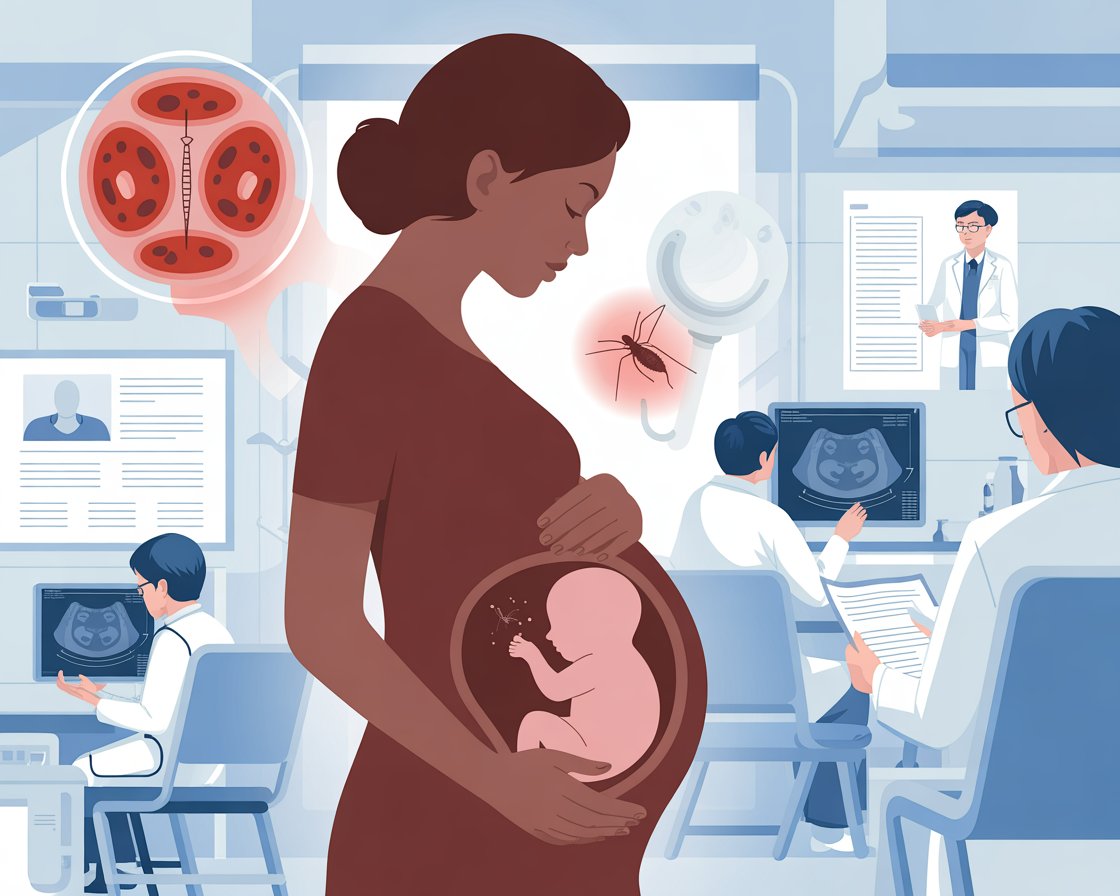
Malaria during pregnancy is a major public health concern, with devastating implications for both the mother and the unborn child.
Objectives: To evaluate the maternal and fetal outcomes in pregnant women infected with Plasmodium falciparum and Plasmodium ovale/vivax.
Methods: This descriptive cross-sectional study was carried out in Obstetrics and Gynecology Ward II using non-probability convenience sampling. It included 110 pregnant women diagnosed with malaria, excluding those with underlying health conditions. Data were gathered through interviews, medical records, and laboratory tests. Various maternal and neonatal factors, including hemoglobin levels and birth weight, were recorded. The chi-square test was performed to evaluate the relationship between malaria and fetal outcomes, with p-values <0.05 considered statistically significant.
Results: Among 110 pregnant women, 58 (52.7%) were aged 21–30 years. The majority, 69 (62.7%), had 2–5 pregnancies, while 25 (22.7%) were primigravida. Preterm birth and full-term deliveries were equally distributed at 55 (50.0%), while anemia was prevalent in 82 (74.5%) cases. Low birth weight was observed in 35 (31.8%) neonates. Among 71 women with P. falciparum infection, 63 (88.7%) developed anemia, significantly higher than in the P. ovale/vivax group (19 of 39; 48.7%) (p <0.001). Preterm birth (45; 63.4%) and low birth weight (34; 47.9%) were also significantly more common in falciparum cases (p <0.001).
Conclusions: P. falciparum infection leads to a higher frequency of adverse fetomaternal outcomes compared to P. ovale/vivax, with greater incidences of hypoglycemia, low birth weight, preterm birth, and anemia.